
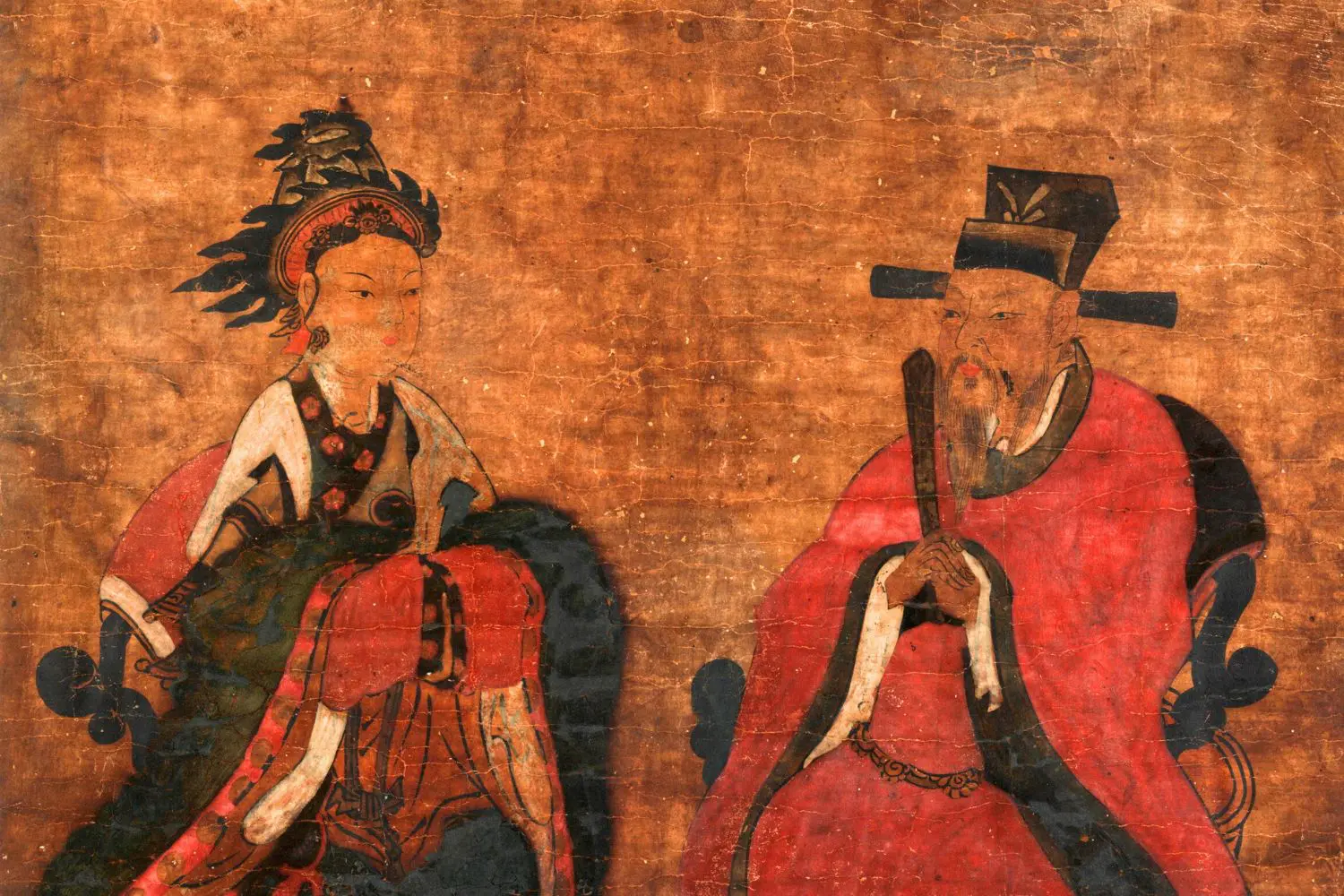
A deep dive into homosexuality in South Korea and how ancient royal scandals shaped its modern gay culture.
As we continue to expand our roster of global adventures, we’re thrilled to launch our brand new tour through the country with claims to fame that include K-pop, kimchi, and cosmetic surgery. South Korea may not be top-of-mind when gay travellers think of welcoming Asian destinations, but there is a decent (and growing) LGBTQ+ scene. Despite being famously conservative and kinda Christian, Korea’s gay history dates back at least 1500 years. Here’s the lowdown on the downlow in the Land of Splendid Rivers and Mountains.
In the beginning…they practiced extra handsy martial arts.
The Silla Dynasty (6th-10th centuries)
Some of the oldest known references to same-sex shenanigans are among an elite corps of young men from the Silla Dynasty. From the 6th to 10th centuries, the hwarang (which translates to Flower Boys) practiced martial arts, military might, and spirituality. But it’s also widely speculated they had private romance clubs where they practiced, shall we say, blurring the lines of friendship.
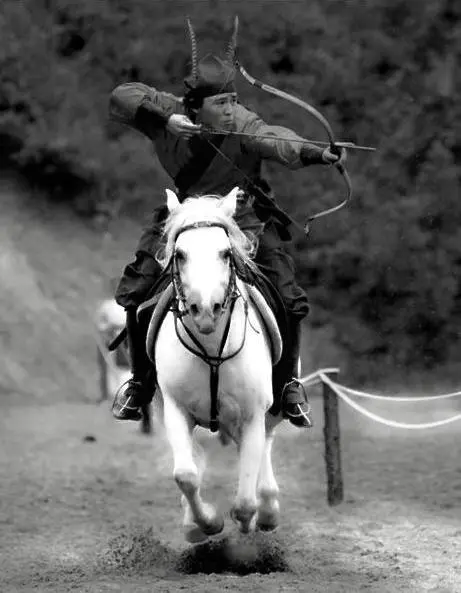
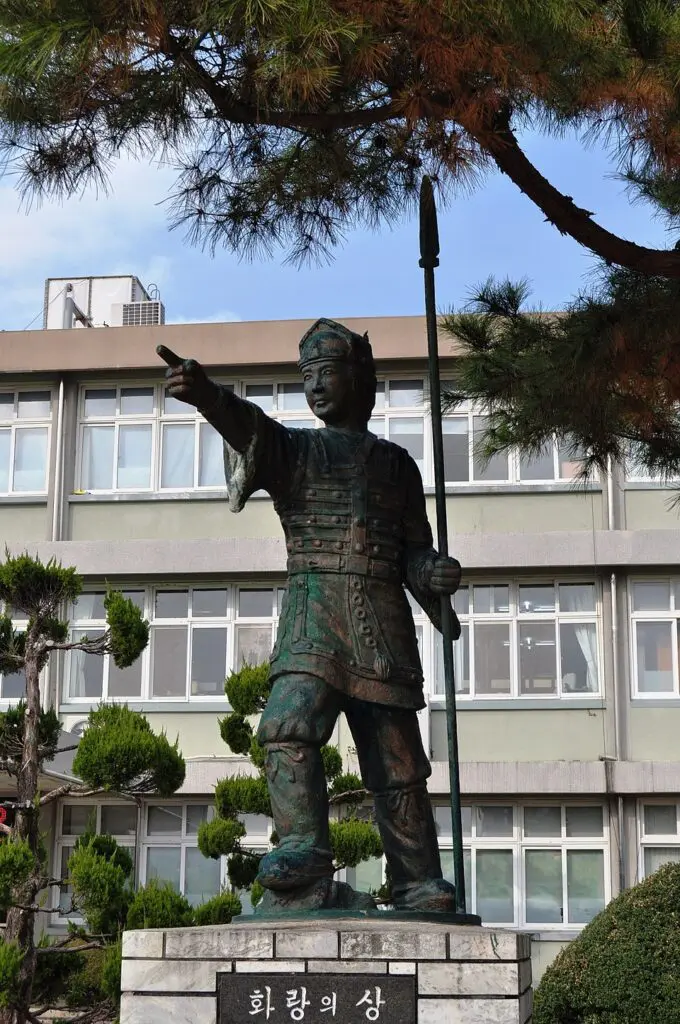
Moving fast up the ranks, King Hyegong, who ruled from 765-780, was notably feminine…and notably murdered by jealous nobles. Word is he had a select few fellows who received preferential treatment. Which might be a tidy way to say they were doing the dirty. But the noble class was also just straight-up uncomfortable with how he blurred gender norms.
Then came the Ministry of Twunks.
The Goryeo Period (918 – 1392)
Not to be outdone, the Korean peninsula had two male monarchs known to wallow in manlove during the ensuing Goryeo Period. King Mokjong and King Gongmin both kept teams of twunks known as chajewhi (‘little brother attendants’).

But King Gongmin took it to the next level, dedicating an entire ministry to finding men that would ‘serve’ in his court. Confucian scholars were not amused.
Now Throw in a Lesbian Love Affair and Intersexy Shamanic Rituals.
The Joseon Dynasty (1392-1897)
This is when things really get spicy. Namely thanks to Kisaeng, a group of female entertainers one could compare to Japanese geisha (speaking of which, you can learn all about Japan’s queer history here). They had male counterparts that devoted their lives to ‘entertaining’ aristocratic fellows. And male or female, there was plenty of gender nonconformity and same-sex frolics in these renowned groups catering to the yangban (societal elite). In turn, this led to unusual expressions of romance, art, and literature.
In the landmark 2005 film The King and the Clown, two such fellows (Jang‑sang and the effeminate Gong‑gil) become jesters that catch the king’s attention. The film delves into their bizarre love triangle and was one of 2005’s biggest hits, with 12 million tickets sold.
A rare lesbian account also exists thanks to King Sejong’s scorned daughter-in-law, Crown Princess Bong. Feeling smited by the prince, she slept with two of her maids, Sossang and Dan-ji. When the king found out, she was divorced and banished from the castle. Both maids were executed, and no further records exist of Bong’s life after exile, but the legend is that she was murdered in an honour killing.
The Joseon Dynasty was also when two intersex people made their mark in Korea’s queer history.
First, Sa Bangji lived in the 15th century. They had male genitalia with an unusually placed urethra but were raised as a woman. Their seemingly lesbian relationship with a noblewoman named So-sa was sensational enough to land in official records. But after So-sa betrayed the relationship, Sa Bangji ran away, met a shaman priestess named Myo-hwa, and began to plot their revenge against So-sa’s family. But after the family killed Myo-hwa, Sa Bangji reconnected with So-sa. Then they both died by suicide. Seriously – this story is salacious enough for modern k-drama.
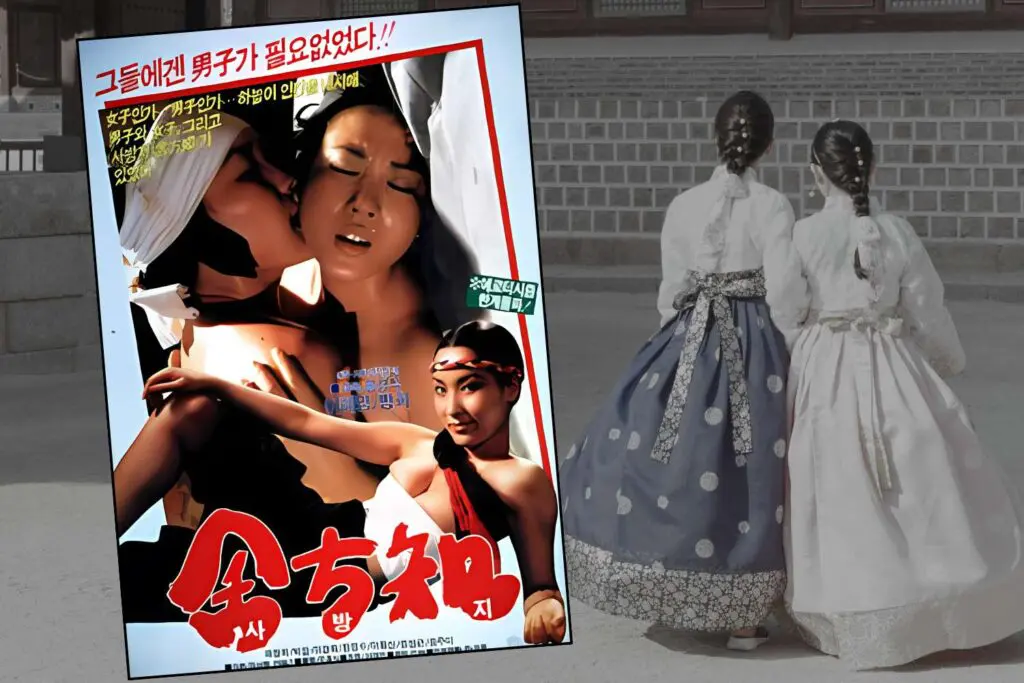
Later, in the 16th century, came Im Seong-gu. This intersex individual, who was described as full of yin and yang, first married a man. But when the time came to consummate the marriage and the husband realized things down below weren’t as expected, Im Seong-gu then married a woman. And while that may sound progressive, it was scandalous enough for them to be exiled. Fortunately, it was *not* scandalous enough for them to be executed.
The Complicated, Modern Military Situation.
Unlike many Western countries, South Korea never explicitly outlawed homosexuality…except in the military. And it all goes back to America’s influence in the 1950s during the Korean War. Their Military Criminal Act (Article 92-6) can see soldiers imprisoned for up to two years. It’s contentious and has been challenged by human rights groups, especially since it punishes citizens for devoting themselves to the country.
There was a military witch hunt.
Only a handful of years ago, in 2017, Korea’s military police began logging into gay dating apps with an unsavoury goal: to bust and punish soldiers.
There’s been some complicated progress from Article 92-6. For example, courts overturned the conviction of two soldiers having sex off-duty in a private residence (the “rationale” for the conviction was because it ’jeopardizes the autonomy, equality, and dignity of soldiers’). Unfortunately, as recently as 2023, the Constitutional Court upheld this discriminatory policy (for the fourth time since it was first challenged in 2002).
Korea also faced its first openly transgender soldier.
Byun Hui-su was South Korea’s first openly trans soldier. She was a staff sergeant, tank driver, and wanted nothing more than to serve her country.

But after she underwent gender affirming surgery, she was forcibly discharged in 2020 for being physically and mentally unqualified. In 2021 she would die by suicide, but her death was not in vain. First a South Korean court would rule her discharge unlawful. Then a Ministry of Defense committee declared that Byun died as a soldier in the line of duty, a significant statement.
And that brings us to Korean LGBTQ+ Life Today.
Though details are scant, stories of queer subculture in modern South Korea go back as far as the 1950s. In the 1970s, there was a ‘scene’ centred around the Bada Building in Seoul’s Euljiro (it was even celebrated in a 2024 documentary called Paradise). And by the 1990s, gay men began to stand loud and proud.
A university student’s classified ad may have ignited modern queer identity in South Korea.
In March 1995, Seo Dong-jin posted in Yonsei University’s student journal that he was looking for other gay men ‘like him’. The goal was to create a safe space for discussions like progressive human rights, versus sneaking into sexualized bars without a sense of community. By December, his group would appear on Korean National television to discuss society’s rejection of gay men and stigma against HIV. Today he’s a sociologist, cultural critic, and university professor who celebrates minorities for wanting inclusion.
South Korea’s first celebrity came out in 2000.
Hong Seok-cheon was an accomplished model, actor, television personality, and comedian when he came out in 2000. But it was no laughing matter. His success would unravel after he truthfully answered a question about his sexuality on a variety show. While the show was pre-recorded and they cut out the exchange before the episode went to air, a journalist caught wind of the exchange. They offered to publish an interview with Seok-chen where he would confirm his truth. Seok-chen was immediately fired from all his gigs, not to mention verbally abused and discriminated against by the general public. In short: he was canceled.

While he initially planned to exile himself to New York, he opted to forge ahead and prove the naysayers wrong at home. First he published a memoir that included tales of his failed relationship with a Dutch fellow. Then he opened a restaurant called Our Place in Itaewon (he now owns nine restaurants covering a world of flavours and cuisine). He also delved into the world of politics, joining the Democratic Labour Party in 2004.
Today his popularity has bounced back, in part thanks to his multiple restaurants. Along with his previous successes he’s now revered as a celebrity chef to rival the likes of Gordon Ramsay or Jamie Oliver (only zestier).
He also paved the way for others to come out with fanfare instead of friction. For example, singer Bain of the boy band JUST B came out in April of 2025.

He was not the first pop star to come out, but he was the first to do so at the height of his career. On stage. In front of a massive Los Angeles audience. To resounding applause. But this announcement was bittersweet. In an article from The Korea Times, Bain admitted, “It’d be a lie to say the public response in Korea and abroad was the same.”
Korea’s Queer Culture Festival also started in 2000.
Now known as the Seoul Queer Culture Festival, Korea’s take on Pride has grown immensely, despite ferocious opposition, since its first march with a mere 50 people. For 3 years in a row (2023/24/25), the city blocked them from using Seoul Plaza under the guise of scheduling conflicts with Christian events.

While police initially banned the parade outright, courts overturned that decision. There had been a rival march planned by a group called Love Your Country, Love Your Children Movement. So police cited Article 8 of the Act on Assemblies and Demonstrations, among others, for their decision: “Rallies may be banned wherever two or more rallies are planned by groups with conflicting goals.”

Today, celebrations of pride continue to grow. The 2025 festival saw record numbers of participants, vendor booths, and a new location to prevent overcrowding. A Korean government agency joined the fun for the first time, indicating a progressive shift. Festivals are even held in the city of Daegu and on the island of Jeju!
You can’t get married. But you can have a spouse.
While same sex marriage has yet to be legalized, a landmark ruling was made in 2024: gay or straight, anybody that was part of a de facto marriage (their term for common law) was entitled to all spousal benefits from the National Health Insurance Service.
In conclusion…
As you can see, a significant number of Koreans still view homosexuality as a Western blight, convinced real Koreans would never indulge in such ‘lurid’ behaviour. Their Western Christian and Eastern Confucian influences both emphasize heteronormative family structures, monogamy, (traditional) reproduction, and respect for elders.
Moreover, only 3% of the population identifies as part of LGBTQ+ spectrum today, and South Korea is one of only three countries in the OECD (Organization for Economic Cooperation and Development) to score an F, meaning they actively persecute their queer communities.
But while South Korea may not be as progressive as nearby Asian countries, it’s still an illuminating destination for the LGBTQ+ community to visit…and queer culture *is* progressing. Seoul offers an energetic gay nightlife scene in the neighbourhood of Itaewon, playfully known as ‘Homo Hill.’

You’ll find more gay bars in Jongno, which is a bit more low-key and traditional. As far as representation in pop culture goes, the recent, massive Netflix movie KPop Demon Hunters is famously queer coded (with a major theme about hiding your true self to avoid coming out to your family). And there’s even a gay dating reality series called His Man, which returned for a fourth season in August 2025.
Suffice to say, South Korea has come a long way, even if there’s still progress to be made.
Does South Korea’s fascinating gay history have you ready for a visit?
Join us in South Korea on our Busan to Seoul tour. If you have questions or want to learn more, Contact Us or shoot us an email at info@outadventures.com
Featured Posts
Visit the Korean Demilitarized Zone (DMZ) and explore key sites like the Third Infiltration Tunnel, Dora Observatory, and Dorasan Station, gaining a deeper understanding of Korea’s divided past and ongoing hope for peace. Read More
Japanese customs are notoriously complex. To avoid ruffling feathers, we’ve put together a cheat sheet for travellers visiting The Land of the Rising Sun. Read More
It’s the biggest continent. The most populous. And with 48 nations spanning from the Mediterranean Sea to the Pacific Ocean, Asia offers every type of geography. Here’s our list of the best (and worst) countries for LGBTQ+ travel! Read More
Our expert team has been working to craft fresh and spectacular itineraries beyond your wildest dreams, and we're proud to unveil our brand new 2027 gay tours and cruises! Read More